Save millions in electricity bills by opting for solar for your operations. Solar energy has become the source of cheapest electricity across most of the world with Levelized Cost of Energy (The LCOE is a measure of the average net present cost of electricity generation for a generator over its lifetime) dropping to as low as $0.03 per kWh in some parts of the world. In addition to that the solar application can significantly reduce the carbon footprint of your company in your journey towards becoming a net-zero carbon consumer. This affordable and eco-friendly source of energy can be easily tapped by opting for conversion of your rooftop into a power generating solar field at very affordable price. This rooftop can be utilized in two ways –

Captive Consumption

(With or Without Batteries)

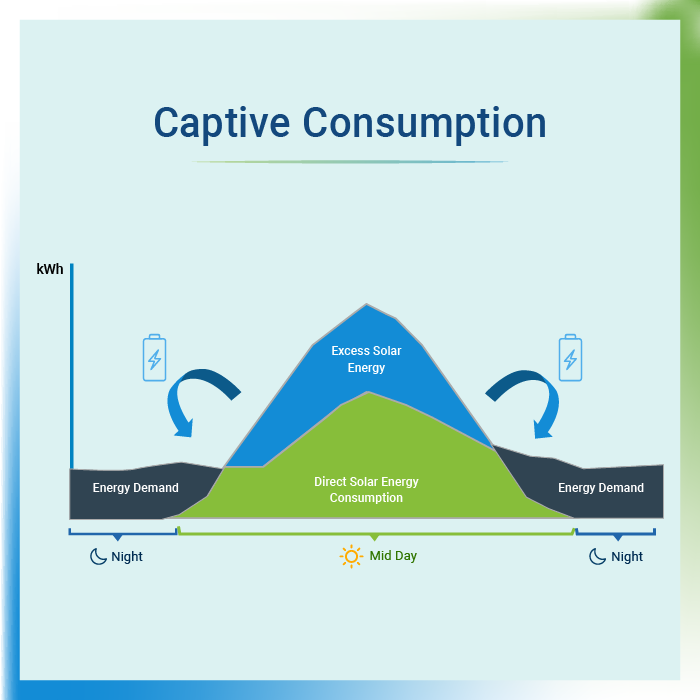
For a commercial or industrial application, thousands of kWh are consumed every year. For a limited space on rooftops, the entire generation of solar electricity can be consumed within the establishment and therefore no interaction with the distribution company is needed. The entire consumption of the solar-generated energy is behind-the-meter in this case.

For applications where a significant amount of consumption takes place through diesel generators (due to a weak or intermittent grid) and a Net Metering or a competitive Feed-in-Tariff scheme is unavailable, introduction of batteries can significantly improve the renewable fraction and reduce the electricity bills further. Captive applications with batteries are strongly recommended for Africa to reduce the energy expenses and secure the facilities from volatile and continuously rising cost of electricity. With a strong presence in ECOWAS and East Africa, Eneriva Renewables can help you in your journey of electricity bill reduction through captive consumption.


Net Metering / Feed-in-Tariff

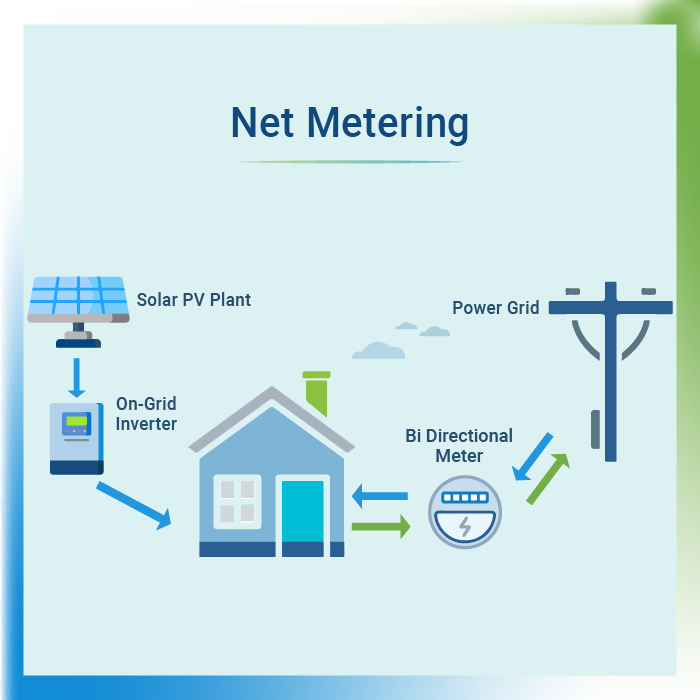
In many parts of the world, the distribution companies also offer Net Metering or Feed-in-Tariff schemes. In Net Metering scheme, the excess energy generated by your solar power plant is fed into the grid through a bi-directional meter during peak solar hours. This compensates for the electricity consumed by your facility during non-solar hours. Due to this scheme your total energy savings come from your total solar energy generation since any excess electricity generated by your solar plant is utilized to offset your grid electricity bill. The Net Metering schemes in India is a shining example of this, while several African countries such as Ghana, Kenya, Zimbabwe, and Tunisia are in process of implementing the same.

The Feed-in-Tariff scheme allows you to feed excess solar electricity at a rate fixed by the distribution company called Feed-in-Tariff. Such schemes are available in South Africa, and several European countries.

Start Saving Today with the Expertise of Eneriva Renewable Team

Detailed Techno-commercial Analysis

Curated High-quality Components

Competitive Prices

Expert Execution